
Insights from HFSE 2025, San Diego
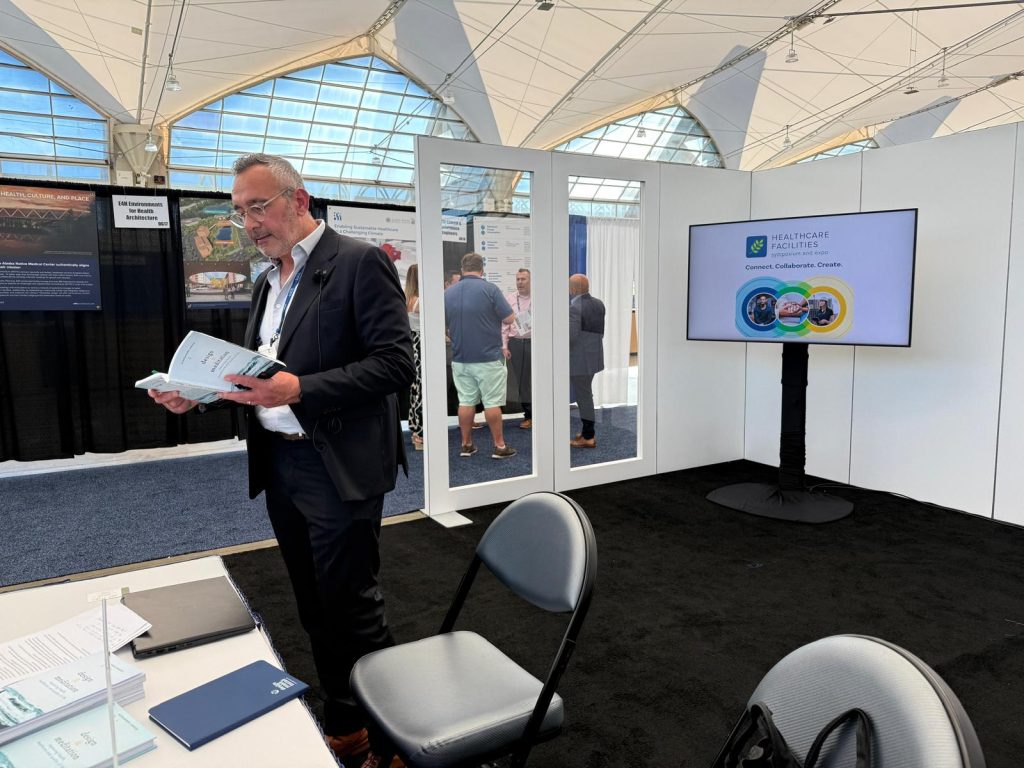
At the Healthcare Facilities Symposium & Expo 2025, held in San Diego, visionary leaders gathered to explore the future of healthcare environments. Among the standout presentations was ACA’s Alex Caruso’s compelling session on Quantum Architecture, a transformative approach to design that blends science, empathy and consciousness to support healing and wellbeing.

Reimagining the Built Environment
Alex introduced Quantum Architecture as a framework rooted in four principles: Complementarity, Consciousness, Contextuality and Connectivity.
These principles challenge conventional design thinking by proposing that buildings are not static structures, but living systems that interact with human energy, emotion and intention.
Key Outcomes from the Presentation on Quantum Architecture
1. Designing with Awareness
Alex’s Conscious Design Framework emphasizes the cause-and-effect chain:
Intention → Choice → Action → Effect on Health
This model encourages architects and healthcare planners to design with purpose, creating environments that actively support recovery, emotional balance, and resilience.
2. Empathic Design in Practice
Through personal stories, including a life-changing motorcycle accident, Alex illustrated how empathy and lived experience inform his work. His projects integrate: natural light and organic materials; multi-sensory cues for orientation and comfort; bio-inspired geometry and cultural symbolism and spaces that evoke emotional memory and reduce stress
3. Healing Through Vibrational Harmony
Drawing from quantum physics and neuroscience, Alex explored how vibrational energy, from sound, light and spatial flow, can influence wellbeing. His approach aligns architecture with circadian rhythms and emotional resonance, helping users feel more connected and balanced.
4. Inclusive and Intergenerational Design
Alex’s work also addresses multi-generational living, cognitive diversity and cultural sensitivity. His two-step survey process (pre-design and post-occupancy) demonstrates measurable improvements in user experience and quality of life.
Why Quantum Architecture Matters
In a world facing rising stress, chronic illness and aging populations, Alex’s message was clear:
“Architecture should do more than shelter—it should heal.”

His presentation resonated deeply with attendees, sparking dialogue on how quantum principles can inform person-centred, preventative healthcare environments.
Keep up to date with ACA news!
Frequently Asked Questions
What is Quantum Architecture?
Quantum Architecture is a design philosophy developed by ACA Co-Director Alex Caruso that explores the relationship between people, space and human experience. Drawing inspiration from concepts within quantum theory and mindfulness, it encourages architects to consider how light, atmosphere, perception and human interaction influence the way spaces are experienced. Rather than replacing traditional architectural principles, Quantum Architecture provides an additional way of thinking about how buildings can support wellbeing, clarity and meaningful human connection.
What is the Quantum Design Evaluation Assessment (QDEA)?
The QDEA is ACA’s evidence-informed framework for evaluating how the built environment influences health, wellbeing and human experience. It explores the relationship between people, their surroundings and the way they move through spaces, helping designers and clients make more informed decisions that support both operational performance and user wellbeing.
What is healing architecture?
Healing architecture is an approach to design that considers how the built environment can support people’s physical, mental and emotional wellbeing. Natural light, effective acoustics, intuitive layouts, comfortable materials and connections with nature can all contribute to healthcare spaces that feel calmer, more welcoming and less institutional.
How does architecture influence wellbeing?
Architecture can influence how people feel, behave and interact with their surroundings. Thoughtful spatial planning, daylight, acoustics, accessibility, air quality and access to nature can help reduce environmental stress, improve comfort and support a more positive experience for patients, families and healthcare professionals.
What is person-centred design?
Person-centred care design places the needs, dignity, comfort and experiences of the people using a healthcare environment at the centre of the design process. It involves listening to patients, families and staff and using their insights to create spaces that are inclusive, accessible and responsive to different physical, sensory and emotional needs.
How does ACA incorporate wellbeing into its designs?
ACA considers wellbeing throughout the design process by examining how people experience and move through buildings. The practice focuses on factors including natural light, spatial layout, accessibility, sensory comfort and adaptability, combining these considerations with technical requirements and operational needs to create practical, people-focused environments.
Related Resources
– Transforming Healing Spaces – Visionary Guest Speaker on Healthcare Design
– Alex Caruso’s Guest Lecture at the University of Hull
– ACA Delivers Inspiring Lecture at the University of Hull on Healthcare Design Innovation
– Proud Mentor: Alex Caruso Appointed to Prestigious RIBA Future Architects Programme for 2025/26