
Alessandro Caruso Architects (ACA) is pleased to share that our Co-Director, Alex Caruso, recently delivered a guest lecture at the University of Hull on behalf of Dr Pedro Beltran-Alvarez, Senior Lecturer and Co-Director of the MSc Health and Climate Change programme. This session forms part of ACA’s ongoing commitment to collaboration with the university, fostering interdisciplinary dialogue between architecture, healthcare and environmental research. The lecture formed part of the foundation for ACA’s new Healing Design Advisory services, reinforcing our commitment to delivering transformative, evidence-led healthcare environments.
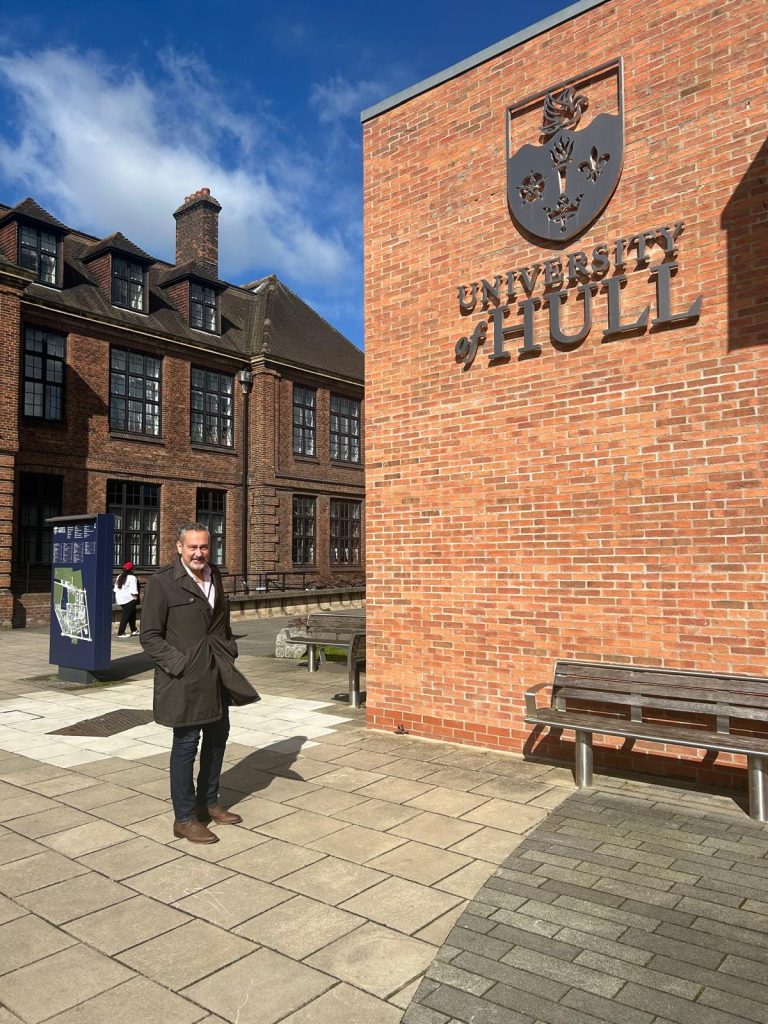
Building on last year’s introduction of the concept of Quantum Architecture, Alex’s lecture focused on presenting the Quantum Design Environmental Assessment (QDEA) as a practical framework that connects architectural design, environmental psychology and healthcare governance. The session also highlighted ACA’s current involvement in a pilot project with Humber Teaching NHS Foundation Trust, marking the first real-world application of the framework within an NHS estate context.
The lecture began by exploring how key architectural conditions, such as light, acoustics, spatial legibility and access to nature, directly influence physiological regulation, cognitive load and emotional experience within healthcare environments. These considerations are becoming increasingly critical as healthcare estates respond to the growing challenges of climate change, sustainability targets and evolving models of care delivery.
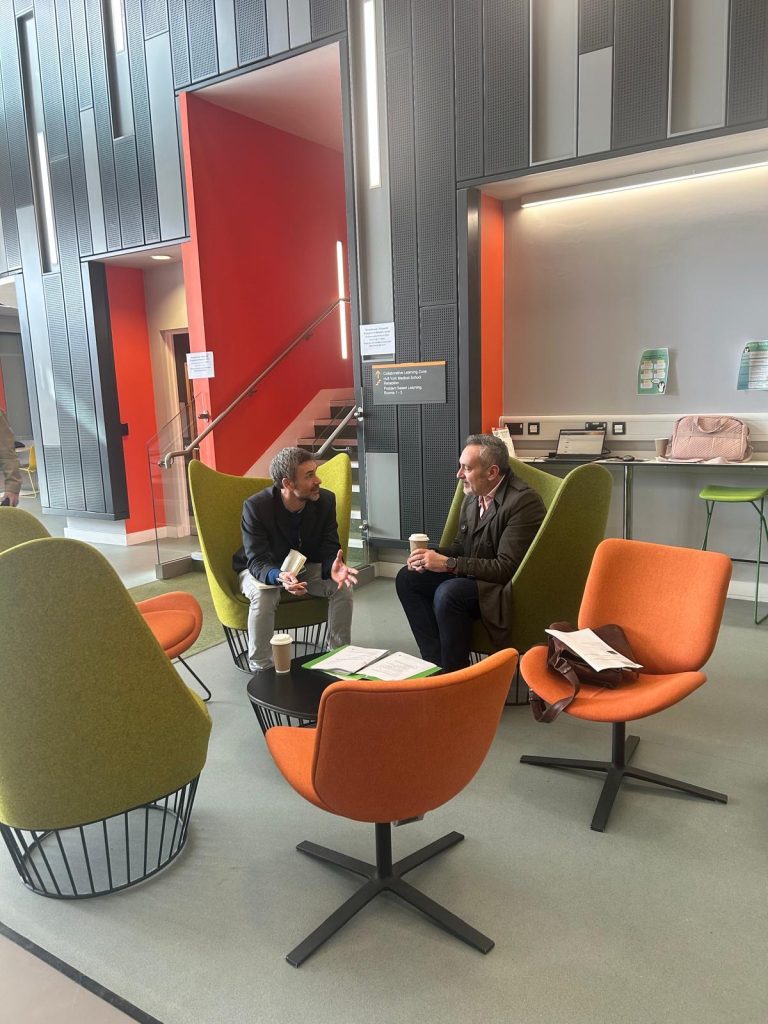
The second part of the session introduced the QDEA framework in more detail, outlining its three interconnected domains: Person, Environment and Flow. These domains were examined through experiential indicators including calm, clarity, choice and control, and connection, offering a structured approach to understanding how design impacts both patient and staff wellbeing.
To enhance engagement, students participated in an interactive exercise using simplified QDEA scoring sheets to evaluate a university space. This hands-on activity demonstrated how environmental assessment tools can translate design principles into practical insights, supporting more informed and human-centred decision-making.
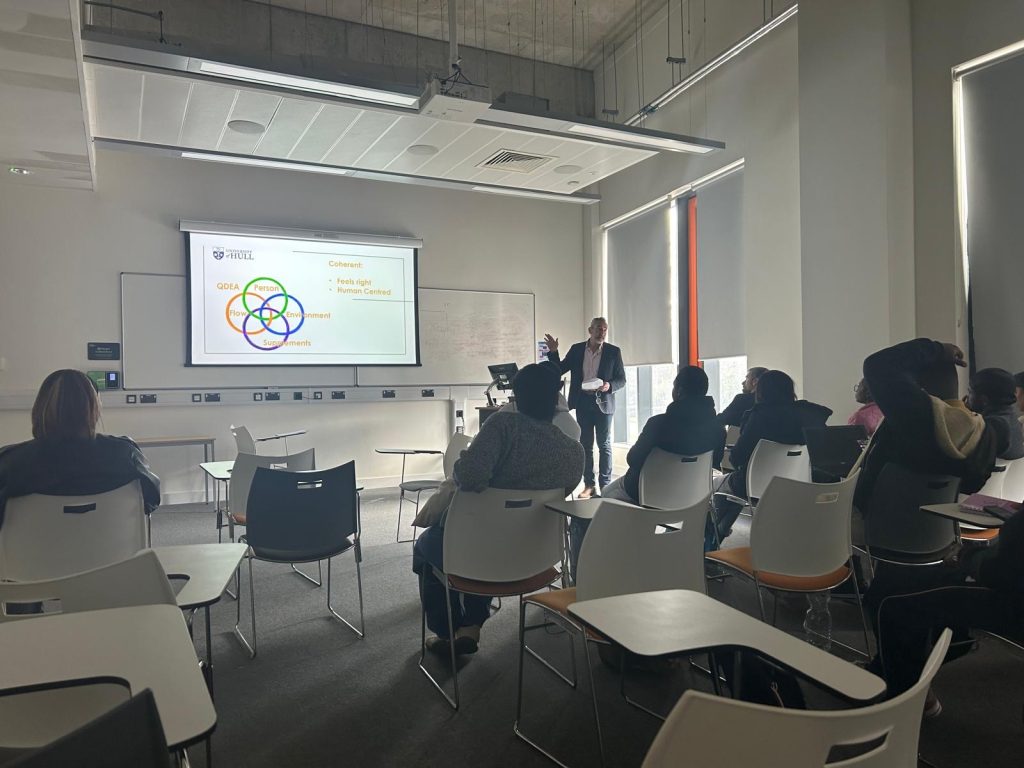
Overall, the lecture encouraged students to view the built environment not merely as infrastructure, but as an active contributor to preventive healthcare and climate-responsive health systems.
Keep up to date with ACA News!
Frequently Asked Questions
What is the Quantum Design Environmental Assessment (QDEA)?
The QDEA is ACA’s evidence-informed framework for evaluating how the built environment influences health, wellbeing and human experience. It explores the relationship between people, their surroundings and the way they move through spaces, helping designers and clients make more informed decisions that support both operational performance and user wellbeing.
What is healing design?
Healing design is an approach to architecture that considers how the built environment can positively influence physical, mental and emotional wellbeing. It creates spaces that help reduce stress, support recovery, improve comfort and enhance the experiences of patients, staff and visitors by going beyond meeting technical standards.
How does architecture influence wellbeing?
Well-designed spaces can reduce stress, encourage social interaction, improve comfort and create healthier environments through thoughtful planning as the design of a building can have a significant impact on how people feel and interact with their surroundings. From the outset, by considering wellbeing, architects can create buildings that positively influence everyday life.
Why is patient-centred design important?
Patient-centred design ensures that the needs, comfort and wellbeing of patients are at the heart of every design. Architecture can help reduce anxiety and improve the overall patient experience by creating welcoming, accessible and easy-to-navigate healthcare environments. Well-designed spaces also benefit healthcare professionals by creating environments that enable safe, efficient and compatible care.
What is ACA’s design philosophy?
At ACA we believe architecture should improve people’s everyday lives. Our philosophy has not only been shaped by decades of professional experience but also by first-hand experience of how poorly designed environments can affect comfort, wellbeing and recovery which has reinforced our belief that great architecture should always be designed around the needs of the people who use it. By combining technical expertise with thoughtful design, we create buildings that are functional, sustainable and genuinely enhance quality of life.
Related Resources
– Transforming Healing Spaces – Visionary Guest Speaker on Healthcare Design
– Quantum Architecture: An Inspiring Paradigm for Healing Spaces
– Alex Caruso Proudly Appointed with Exciting New Role as RIBA Future Architects Mentor for 2025/26
– ACA Sponsors April Property Directors Club Event and Provides Valuable Industry Insight