
An architectural journey through Istanbul, reflecting on the connections between history, infrastructure, art, spirituality and the developing concept of Relational Architecture.
My wife Amelia has become remarkably patient with my architectural curiosity. After many years of travelling together, she has grown accustomed to finding me lingering beneath a vaulted ceiling, examining the junction between two materials, or simply standing quietly trying to absorb the atmosphere of a place.
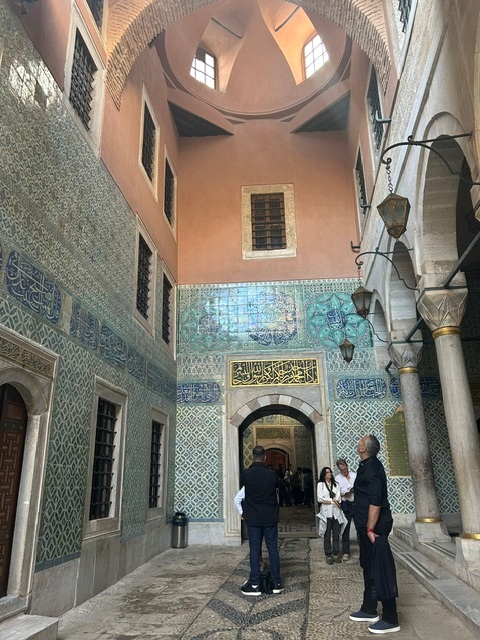
I suspect she has also learnt that when I suggest a quick look inside an interesting building, we may not emerge quite as quickly as anticipated!
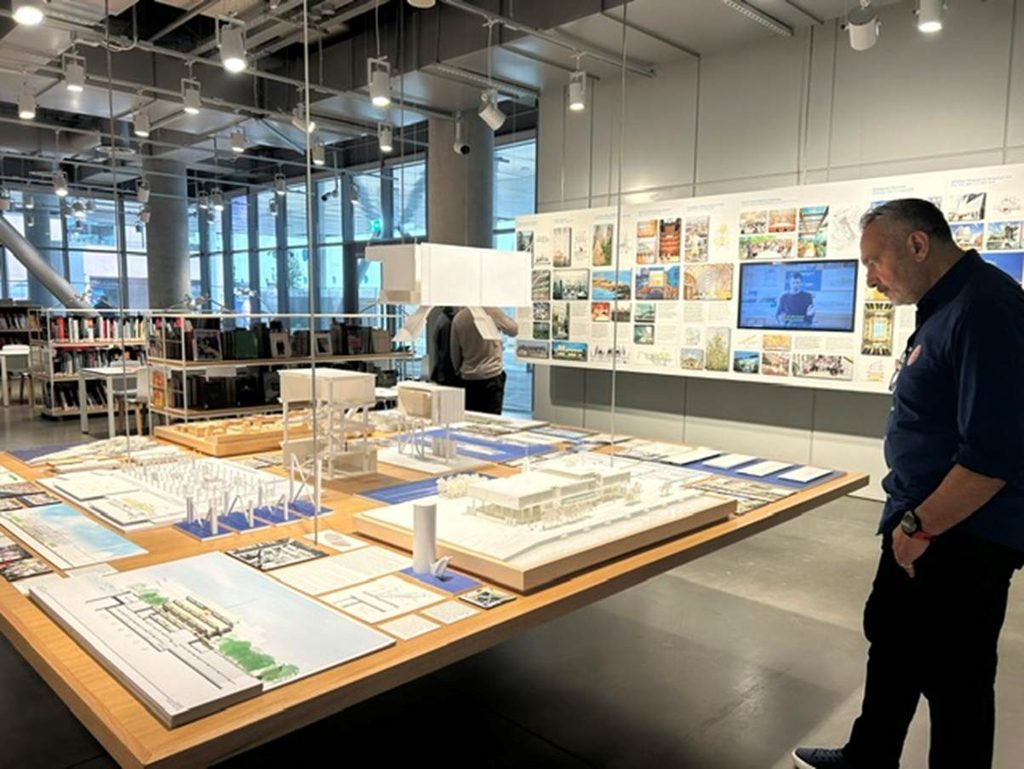
Our recent visit to Istanbul was no exception. We managed to fit an ambitious itinerary into a few days, exploring remarkable examples of Byzantine, Ottoman and contemporary architecture. Fortunately, there was also time for a romantic cruise along the Bosphorus, admiring the extraordinary landscape of palaces, mosques, waterfront houses and hills that define this fascinating city.
Beyond the pleasure of travelling, the visit offered an opportunity to continue an enquiry that began with my earlier book Design and Meditation and now informs our developing research into Relational Architecture.
The question is deceptively simple: What makes architecture meaningful and how does our experience of place influence the way we perceive ourselves and the world around us?
Istanbul, where different civilisations have continuously built upon and reinterpreted their predecessors’ achievements, seemed an ideal place to explore it.
Hagia Sophia: Experiencing Space Beyond Its Boundaries
Completed in 537, under Emperor Justinian I, Hagia Sophia was designed by Anthemius of Tralles and Isidore of Miletus. Its immense dome and complex structural arrangement remain extraordinary achievements of Byzantine engineering.
Unfortunately, considerable scaffolding partially obscured the interior during our visit. Nevertheless, access to the upper gallery offered a fascinating perspective on the relationship between the dome, supporting arches, galleries and the space below.
What interested me was not simply the scale, but the way different architectural elements contribute to an experience greater than their individual parts.
Even the scaffolding offered an unexpected reminder that architecture is never entirely static. Buildings survive through maintenance, restoration, adaptation and the contributions of successive generations.
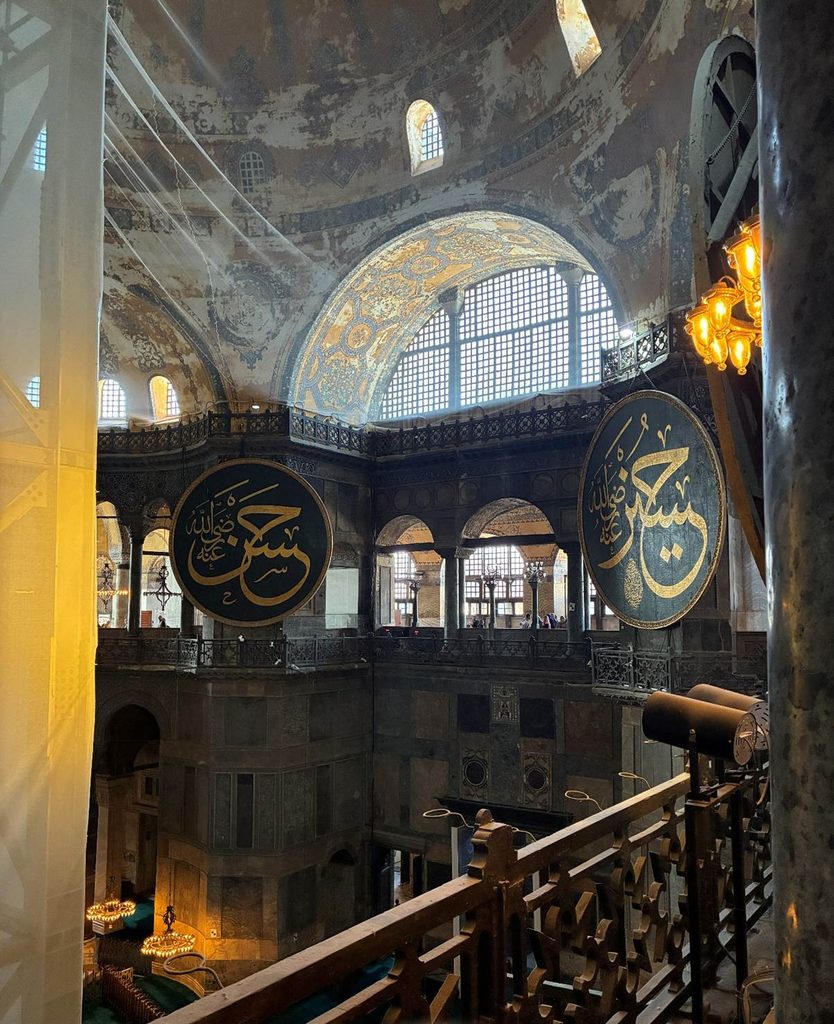
Perhaps the experience of architecture is not determined solely by what was originally designed, but also by the relationships it establishes with those who encounter it over time.
The Blue Mosque: Architecture Beyond Individual Buildings
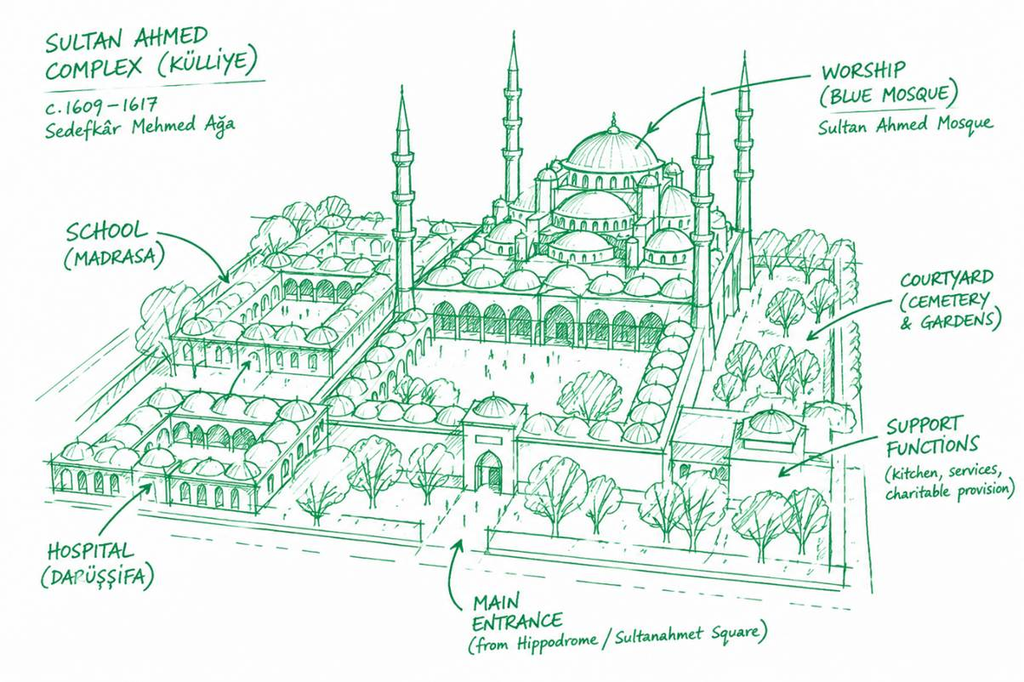
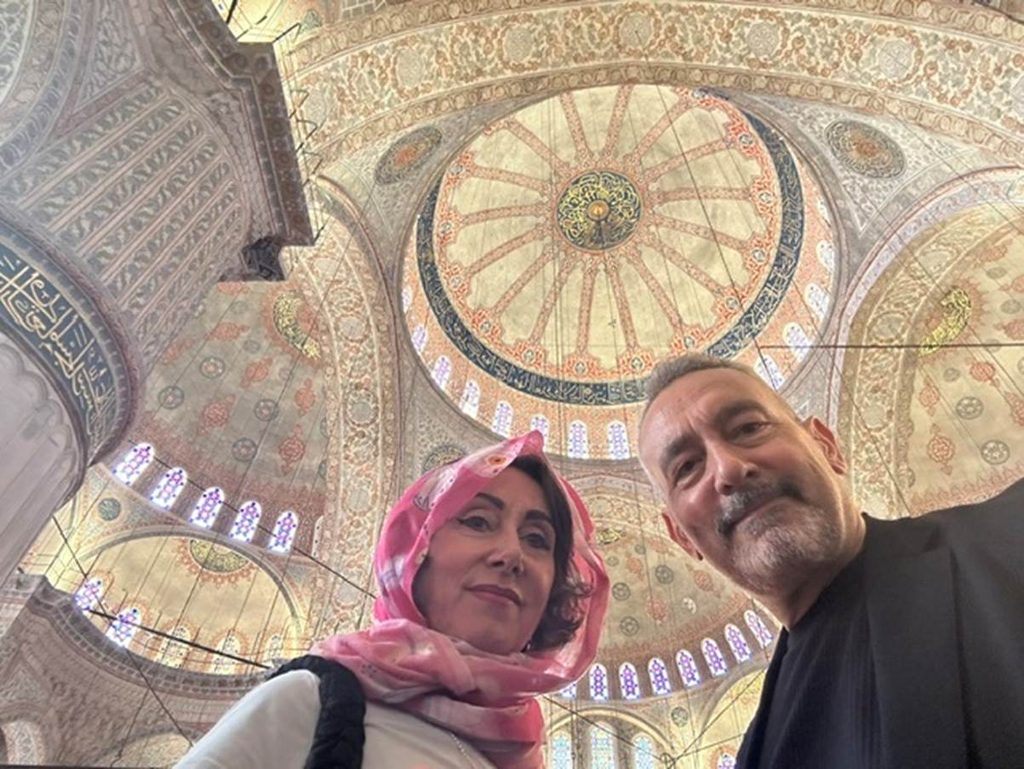
Across Sultanahmet Square, the Blue Mosque, designed by Sedefkâr Mehmed Ağa and constructed between 1609 and 1617, demonstrates another important principle.
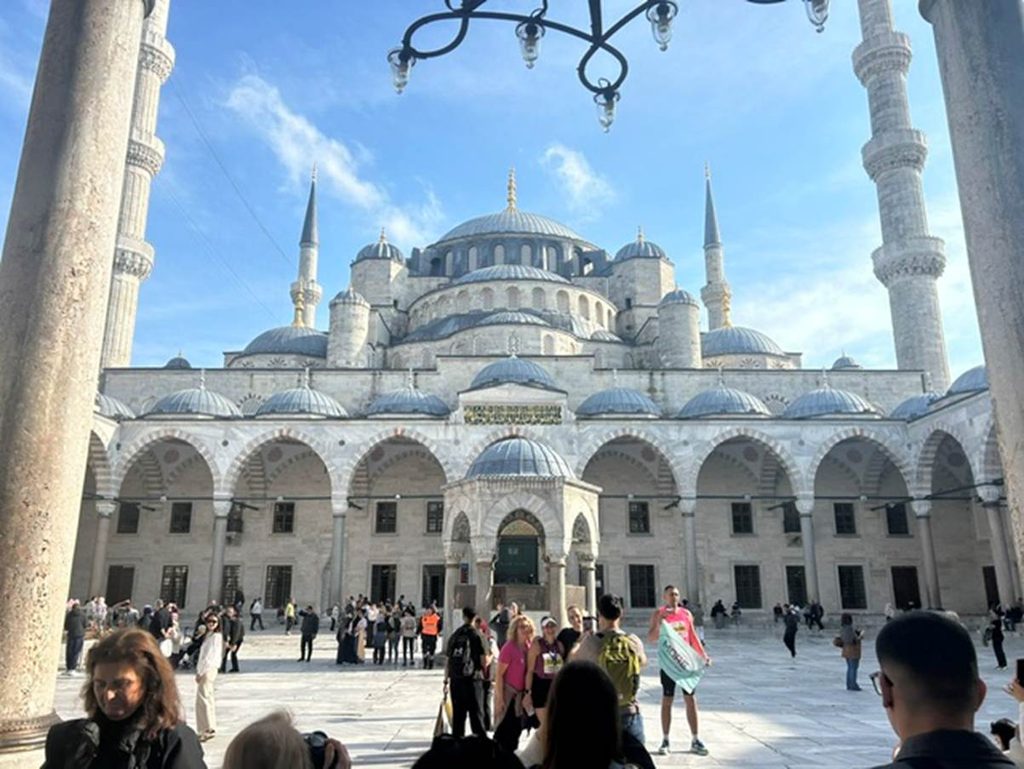
Its remarkable sequence of domes, courtyard and interior spaces is impressive, but I was equally interested in the wider historical külliye: the Ottoman tradition of integrating worship with education, charitable provision and community services, including school and hospital functions within the original Sultan Ahmed complex.
It made me reflect on how contemporary architecture is often divided into separate sectors: healthcare, education, residential, commercial and community.
Yet the human needs these buildings address are closely connected.
Learning, care, belonging, contemplation and social interaction are not independent activities. They form part of our everyday experience.
This is particularly relevant to our work at ACA, where we increasingly consider how healthcare and community environments can support wellbeing beyond their immediate functional requirements.
The Basilica Cistern: When Infrastructure Becomes a Palace
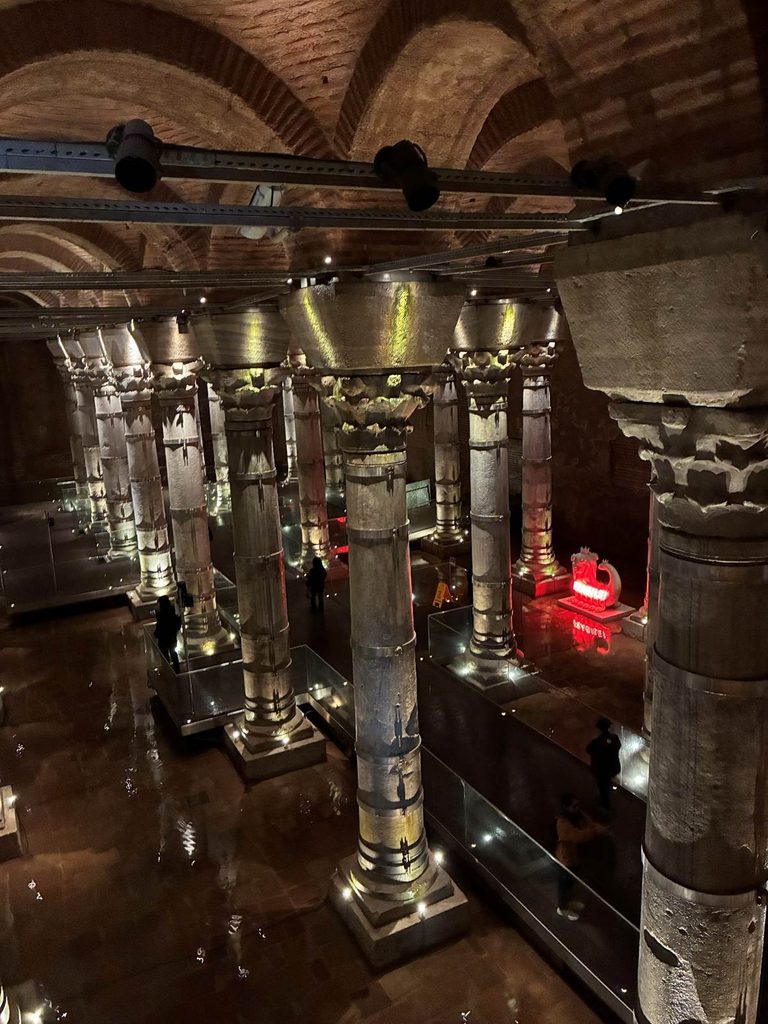
Perhaps the most memorable architectural experience of the visit was descending into the Basilica Cistern.
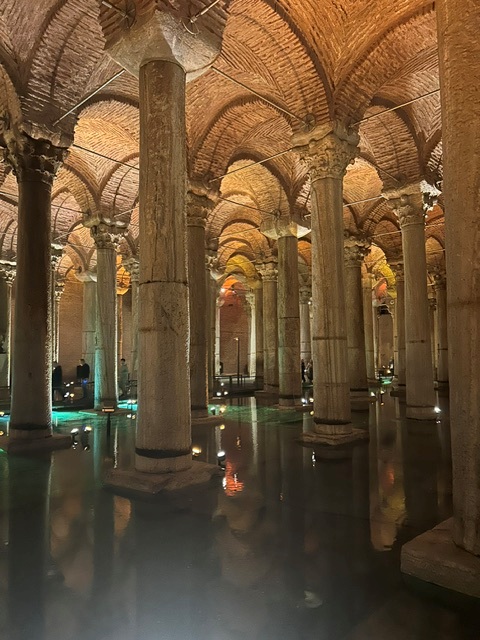
Constructed during Justinian’s reign in the sixth century, this extraordinary underground reservoir once formed part of Constantinople’s water infrastructure.
Approximately 140 metres long and 70 metres wide, it contains 336 columns arranged in twelve rows of twenty-eight, supporting a system of brick arches and vaults.
Its purpose was entirely practical: to store water essential to the functioning of the city.
Yet today it offers an almost cathedral-like experience.
The repeated columns establish an extraordinary sense of rhythm and depth. Reflections extend the apparent dimensions of the space, while changing light reveals and conceals different parts of the structure.
As we moved through the cistern, the relationships between columns continually changed. One perspective opened while another disappeared.
What fascinates me is how such a simple architectural vocabulary (column, arch, vault and water) can create such a powerful atmosphere.
The cistern also offers a remarkable lesson in reuse.
Many columns and capitals were recovered from earlier buildings, their different proportions, materials and decorative details accommodated within a coherent structural arrangement.
The two famous Medusa heads, incorporated as column bases, remain particularly intriguing. Their precise origins and unusual positioning are uncertain, yet they demonstrate how architectural fragments can acquire new functions while retaining traces of their previous lives.
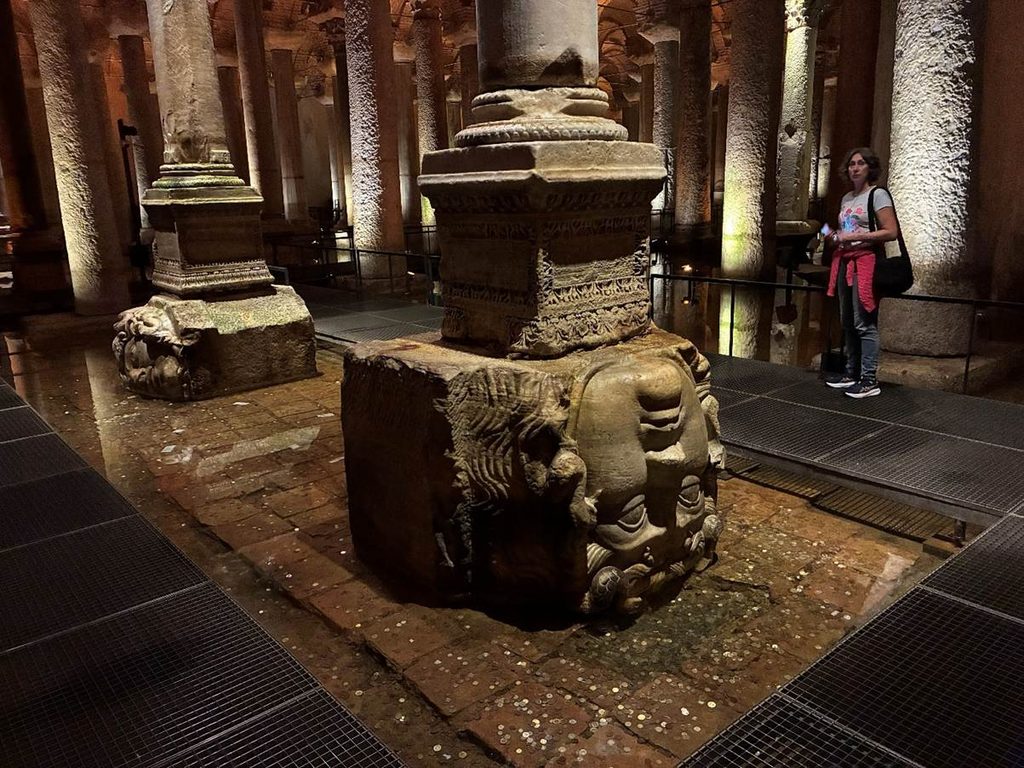
The most recent restoration, completed in 2022, introduced contemporary lighting, walkways and artistic interventions that have significantly influenced how visitors experience the reservoir.
We should recognise that this atmosphere differs from the cistern’s original working environment.
Nevertheless, it raises an important question.
How can something conceived purely as infrastructure become a place of such profound architectural and emotional significance?
Perhaps we sometimes underestimate the potential of the ordinary structures that sustain our lives.
Şerefiye Cistern: When History, Architecture and Art Meet
The smaller Şerefiye Cistern, also known as the Theodosius Cistern, offered a fascinating comparison.
Believed to have been constructed during the reign of Theodosius II in the fifth century, it measures approximately 45 by 25 metres and contains 32 marble columns supporting a beautifully proportioned system of arches and vaults.
Unlike the apparent infinity of the Basilica Cistern, its reduced scale allows the visitor to appreciate the entire spatial composition more immediately.
Here, proportion and restraint become particularly powerful.
What made our visit even more memorable was the contemporary Şahmeran exhibition, which introduced sculptural interpretations of a mythological figure deeply rooted in Anatolian cultural traditions.
Şahmeran, traditionally represented as a being combining human and serpent characteristics, is associated with stories of wisdom, trust, betrayal and healing.
The artworks established an intriguing relationship between mythology, contemporary artistic expression and the ancient architecture of the reservoir.
I found the encounter particularly suggestive because the original purpose of the cistern was to sustain physical life through water, while the exhibition introduced symbolic narratives concerned with human experience and transformation. An interesting cultural interpretation.
Both cisterns demonstrate how architecture can acquire meanings far beyond its original function.
They also raise an important question about conservation: how can contemporary artistic interventions enrich historic environments without overwhelming the qualities that make them significant?
Topkapı Palace: The Architecture of Thresholds
Topkapı Palace, developed from the reign of Mehmed II in the fifteenth century, offered a different architectural lesson.
Rather than being organised around one monumental interior, the palace unfolds through a sequence of courtyards, gateways, gardens and increasingly private spaces.
Each threshold changes the visitor’s relationship with the surroundings.
The architecture gradually reveals itself, creating different degrees of accessibility, enclosure, security and intimacy.
These relationships communicate social organisation and hierarchy through spatial experience.
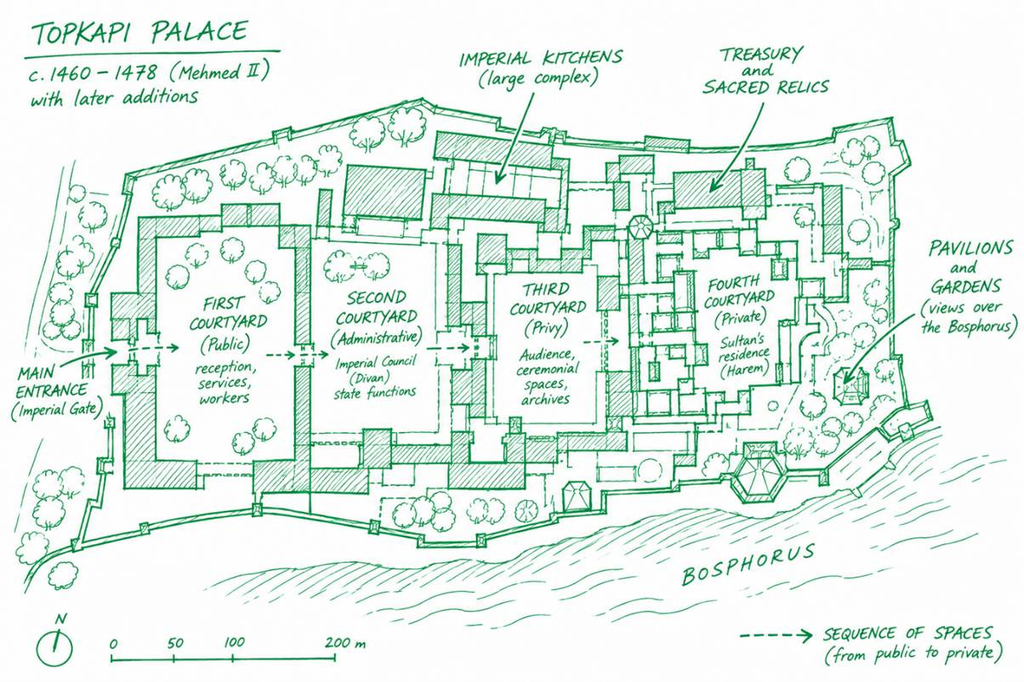
They also remind us that architectural relationships are not automatically beneficial. The same devices that provide privacy and protection can also reinforce exclusion.
For contemporary healthcare and community design, this raises a question particularly relevant to Relational Architecture:
How can thresholds provide security and dignity while maintaining accessibility, independence and opportunities for connection?
From the Grand Bazaar to the Ottoman Mosque Complexes
Istanbul’s historic streets offer architectural experiences that cannot be understood through individual monuments alone.
After the intensity of the Grand Bazaar, visiting Mahmut Paşa Mosque, founded in the 1460s, provided a striking change in atmosphere.
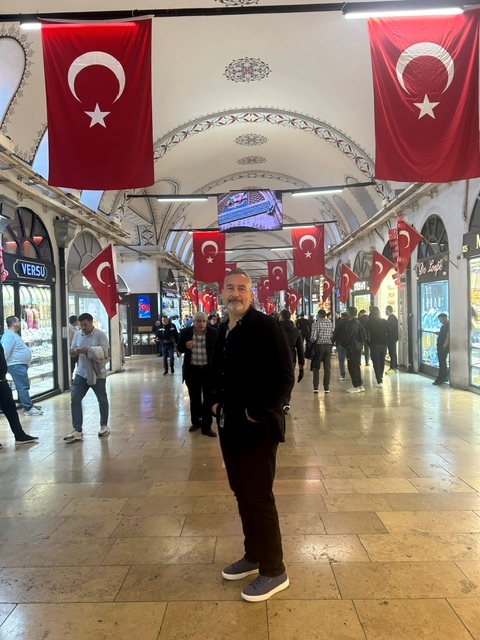
The transition from commercial activity and crowded streets into a contemplative environment demonstrated how contrasting experiences can coexist within a compact urban setting.
The eighteenth-century Laleli Mosque complex, constructed between 1760 and 1764, and the New Mosque complex at Eminönü, begun in 1597 and completed in the 1660s, reinforced the relationship between religious institutions, commerce, charitable provision and public life.
These buildings are not isolated architectural objects. Their significance is inseparable from the streets, markets, communities and activities surrounding them.
It reminded me that some of the most important architectural relationships occur not within buildings, but between them.
The Call to Prayer: When Sound Shapes the City
One of Istanbul’s most memorable experiences requires no entrance ticket.
At different moments throughout the day, the call to prayer emerges from the city’s minarets, sometimes from several directions, overlapping across the urban landscape.
For a visitor, it provides an extraordinary sense of place.
The sound momentarily changes the atmosphere of the streets, introducing a recurring rhythm into the movement of everyday life.
I became interested in how something intangible could influence the perception of an entire city.
Architecture is often discussed through visual qualities, yet sound, time, movement and cultural associations are equally important to our experience of place.
The call to prayer also prompted a more personal reflection on the relationship between spirituality and wellbeing.
Across different cultures, spiritual practices have long provided opportunities for contemplation, social connection, meaning and emotional reassurance.
Could some of these experiences also contribute to the conditions that support physical and psychological healing?
The question deserves exploration rather than an assumed answer. Spiritual experience is deeply personal, and its effects cannot be reduced to architectural form or treated as a substitute for medical care.
Nevertheless, understanding how environments support reflection, belonging and emotional regulation may have important implications for healthcare design.
The Whirling Dervishes: Movement, Rhythm and Awareness
One evening, we attended a Whirling Dervish ceremony associated with the Mevlevi Sufi tradition and the teachings of Jalaluddin Rumi.
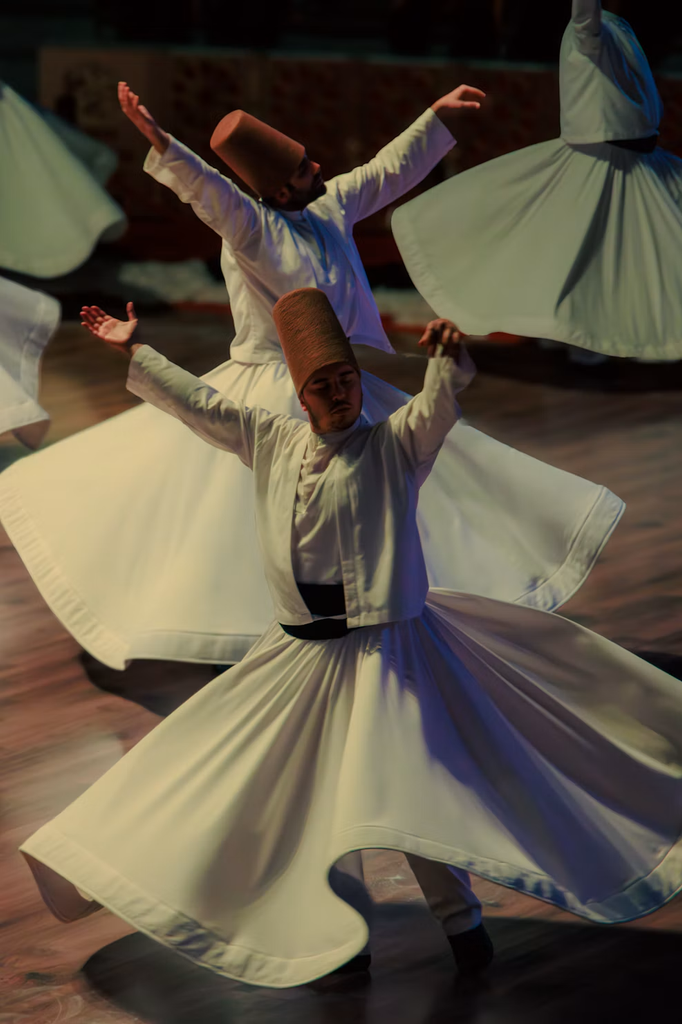
The carefully structured relationship between music, rhythm and turning movement was particularly moving.
Watching the ceremony, I became increasingly aware that our experience of space is inseparable from the movement of our bodies and our perception of time.
Architecture is not experienced by a stationary observer.
We continually reinterpret our surroundings through movement, attention, memory and emotion.
The experience encouraged another question central to my research:
Can architecture create conditions that help people become more conscious of themselves and their relationships with others?
Istanbul Modern: Renzo Piano, the Bosphorus and the Spirit of Place
Our visit to Istanbul Modern offered a fascinating contemporary counterpart to the historic buildings.
Designed by Renzo Piano Building Workshop and opened in 2023, the museum occupies a waterfront location in Karaköy, where the Bosphorus and Golden Horn meet.
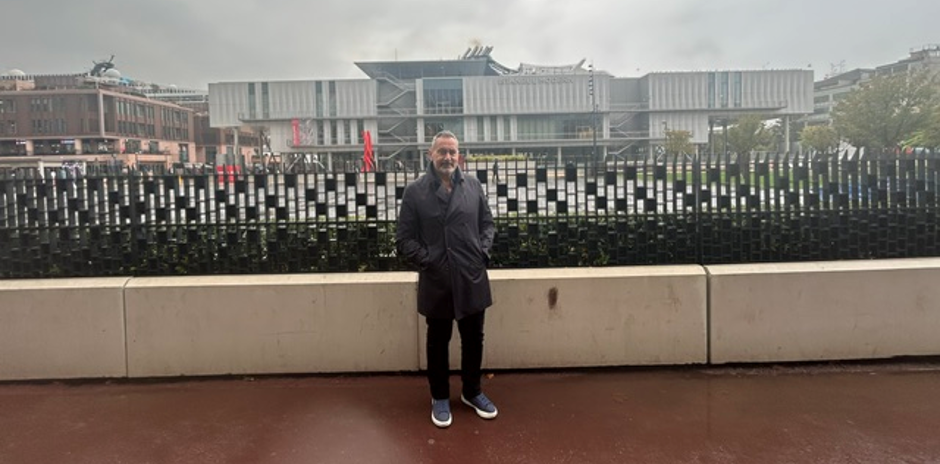
Piano’s design draws inspiration from the maritime character of Istanbul, particularly the changing reflections of light upon the water.
After leaving our coats in the basement, we took the lift to the second floor, where the exhibition galleries offered a journey through modern and contemporary artistic interpretations of Turkish culture and wider human experience.
From there, a staircase led us towards the rooftop terrace.
This sequence was particularly memorable.
Emerging onto the roof, we encountered a shallow expanse of water extending across the building, visually merging with the Bosphorus beyond.
The effect was remarkably simple.
The boundary between architecture and landscape appeared to dissolve, allowing the building to establish a relationship with its surroundings through reflection, horizon and changing light.
During our visit, heavy rain added another dimension to the experience.
Watching the water-covered roof, I wondered whether such a feature might also contribute to thermal moderation or rainwater management. These potential benefits would require examination of the actual technical design, rather than being assumed from its appearance.
What could be appreciated immediately, however, was the relationship between an architectural element and the wider environmental experience.
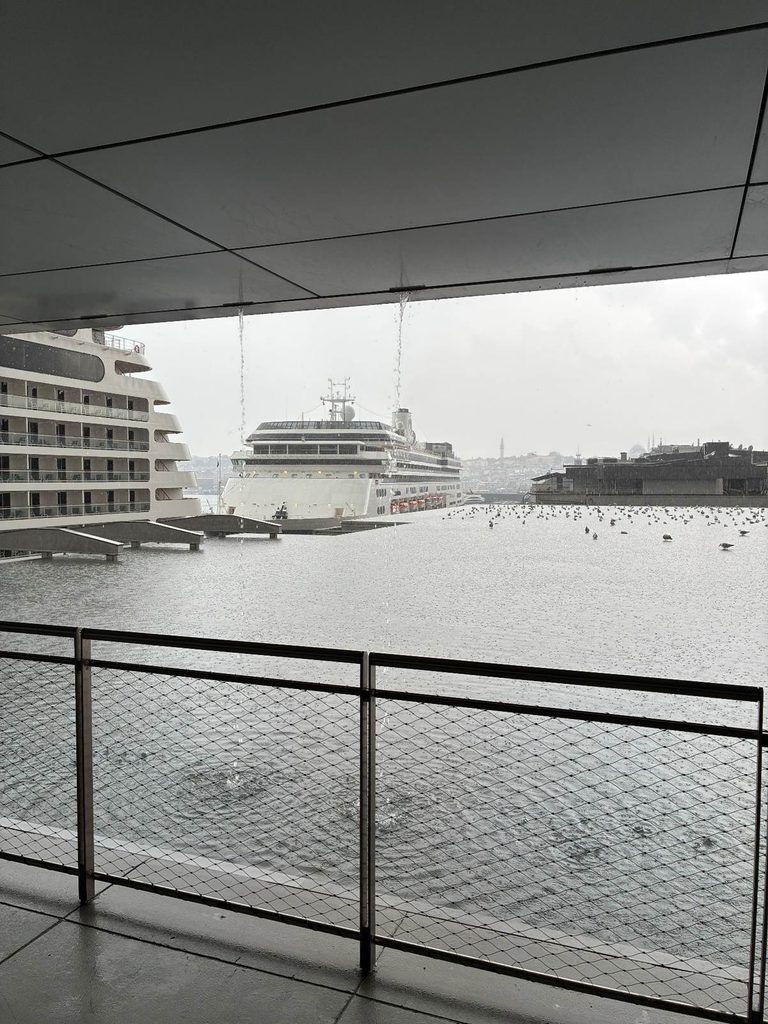
The roof was not simply the termination of a building. It became a place from which to reconsider the city.
This seemed a particularly compelling contemporary interpretation of genius loci, the spirit of place.
Art as a Different Way of Reading Relationships
The exhibitions added another important dimension to the visit.
The collection exhibition Beneath the Same Blue explored artistic responses to abstraction, the human figure, nature, memory, identity and the changing city.
I was particularly interested in the curatorial interpretation of space not simply as physical form, but as something shaped by perception, personal experience and social transformation.
Several themes resonated with our developing research into Relational Architecture.
One was the idea that nature should not be understood as a collection of separate objects, but as an interconnected system in which people, landscape, culture and ecological processes continuously influence one another.
Another concerned the city as a living accumulation of experiences and memories, rather than a fixed arrangement of buildings and streets.
These artistic enquiries share an interesting conceptual territory with Relational Architecture.
They encourage us to consider material, space, memory and perception not as isolated subjects, but as parts of a continually changing relationship.
Art does not provide scientific evidence for architectural wellbeing, but it can challenge the assumptions through which we interpret our environments.
And sometimes a different way of seeing is the beginning of a different way of designing.
The Bosphorus: Understanding the City as a Landscape
Our romantic boat trip along the Bosphorus provided a welcome change of pace and another architectural perspective from a terrace restaurant.
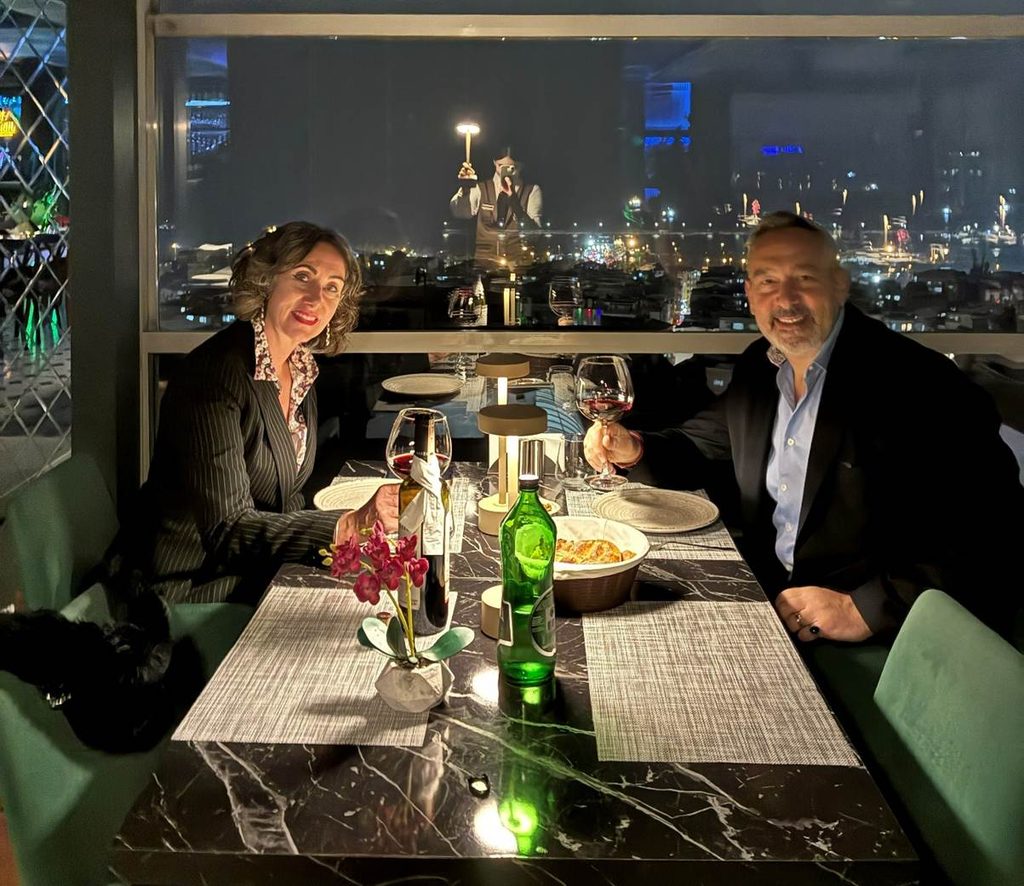
From the water, the city revealed itself as a continuous relationship between topography, architecture, vegetation and maritime activity.
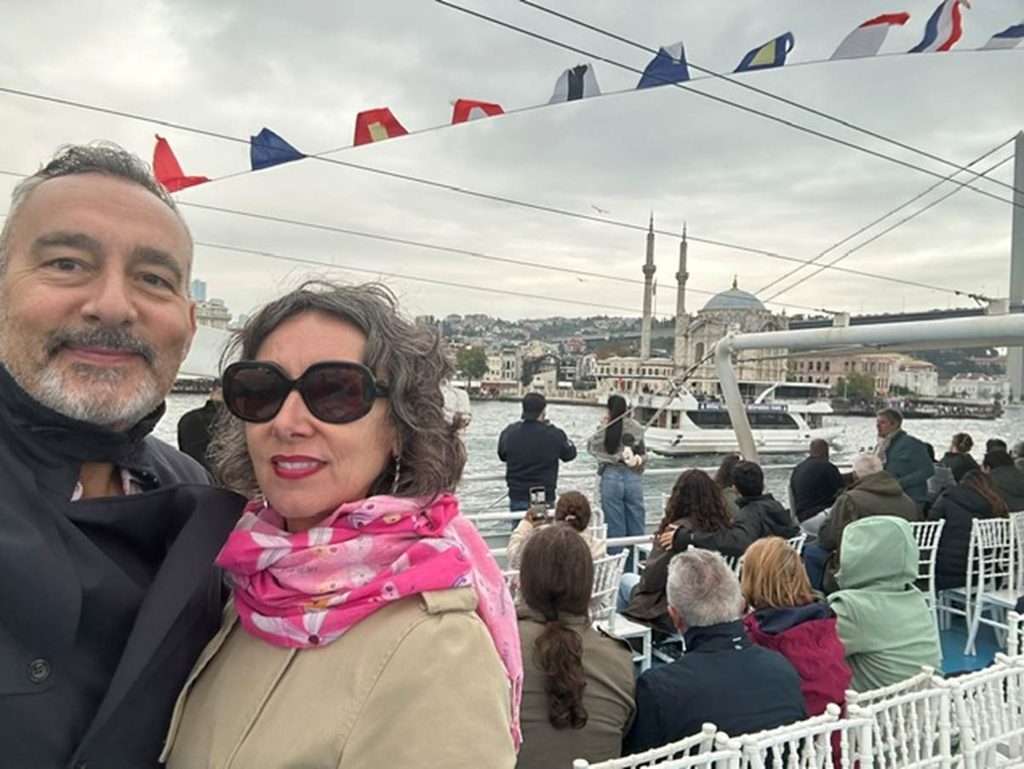
Palaces, mosques, bridges, historic waterfront houses and contemporary developments appeared as parts of a wider landscape rather than individual destinations.
The experience reinforced something I have increasingly come to believe: architecture should not be understood solely through the boundaries of a site or building.
Its character and significance also emerge from the environmental, cultural and social systems to which it belongs.
Towards Relational Architecture
Istanbul has provided a remarkable opportunity to reflect upon the developing concept of Relational Architecture.
At ACA, our research seeks to understand how the relationships between people, environmental conditions, activities, culture and time influence the experience and performance of buildings.
Our emerging Relational Environmental Assessment (REA) and Relational Environmental Action Plan (REAP) methodologies aim to translate this understanding into a more structured process of evaluation, prioritisation and practical improvement.
The lessons from Istanbul are not limited to historic architecture.
The cisterns demonstrate how infrastructure can generate extraordinary spatial experiences. The Ottoman complexes illustrate the importance of integrating different aspects of community life. Topkapı Palace reveals how thresholds influence accessibility and behaviour. Istanbul Modern shows how contemporary architecture can engage with landscape and cultural identity.
The art exhibitions and spiritual experiences introduce another dimension: the relationship between the external environment and our internal perception of it.
These observations reinforce the need to consider architecture beyond its physical form and immediate function.
They also remind us that wellbeing cannot be attributed to a building simply because it is beautiful, historic or spiritually significant. The experience of place depends upon the individual, their circumstances and the relationships that the environment enables or constrains.
Perhaps the most valuable outcome of the journey was not finding answers, but discovering new questions.
Standing beneath the vaults of the Basilica Cistern, surrounded by columns that have supported the city for almost fifteen centuries, I was reminded that some of the most profound architectural experiences emerge from remarkably simple relationships.
Structure, material, light, water, movement and memory.
Perhaps, before we can design better buildings, we must first learn to recognise the relationships that give them meaning.
Keep up to date with ACA News!
Related Resources
– New York’s Wonderful Wonders Through an Architect’s Daughter’s Eyes
– Delightful Dublin Moments Through an Architect’s Daughter’s Eyes
– Valencia Through an Architect’s Lens: Our Top 5 Unforgettable Family Moments with ACA!
– 6 Eye-Opening Lessons I’ve Learnt Being Married to an Architect – by Amelia Caruso.