
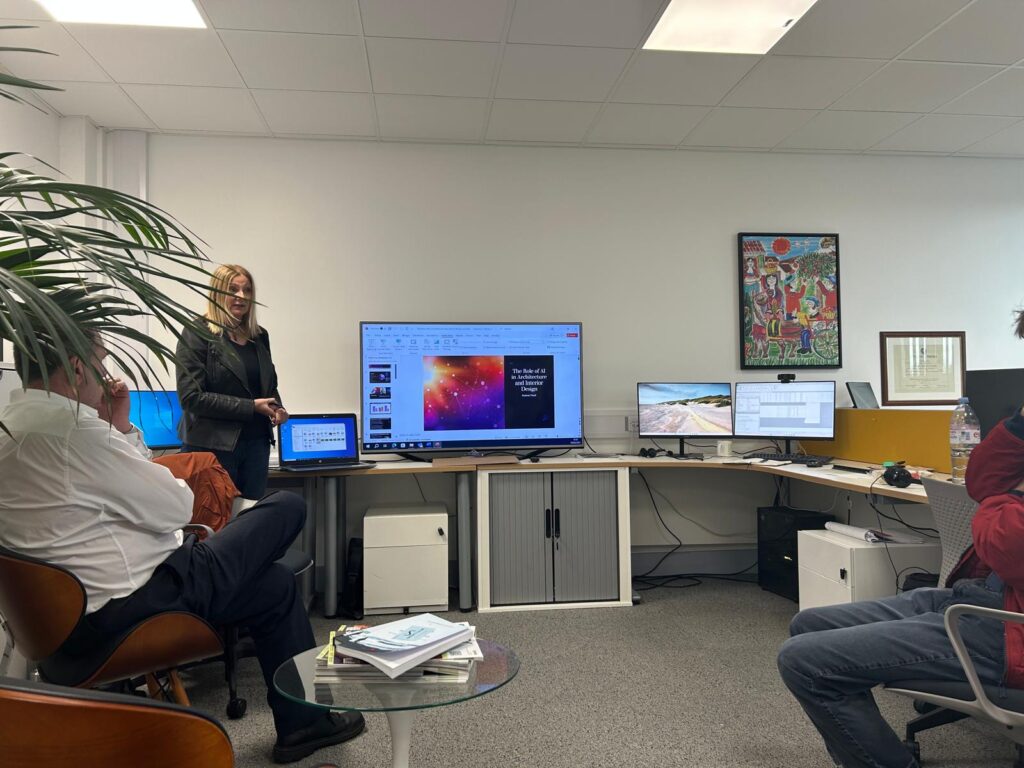
At our latest Lunch and Learn session, Andrea led an insightful discussion on one of the most talked-about topics in the design world today: the role of artificial intelligence (AI) in architecture and interior design.
The session brought together our team members to explore how AI is influencing the way we create, visualise, and personalise spaces — and to ask some important questions about where human creativity fits into this evolving picture.
The Benefits of AI in the Architecture & Interior Design Process
Andrea highlighted the growing use of AI-powered tools that are reshaping workflows and accelerating decision-making. From automated floor plans to predictive environmental modelling, AI is helping architects and designers work more efficiently.
One of the key benefits discussed was AI’s ability to deliver personalised architecture design solutions. By analysing data on user behaviour and preferences, AI can help shape spaces that are more responsive to individual needs — whether it’s a healthcare environment, a residential layout, or a commercial fit-out.
Other advantages included:
- Improved efficiency through automation of repetitive tasks
- Faster design iteration with real-time performance feedback
- Informed decision-making based on data-driven insights
A Cautionary Perspective
While the potential is clear, Andrea also facilitated a thoughtful conversation on the drawbacks and ethical implications of AI in the design industry. A central concern was the possible erosion of creativity — the unique, intuitive spark that defines human-led design.
There was also discussion around the risk of over-reliance on AI tools, which may result in less critical thinking and a loss of the tactile, emotional understanding of space that great architecture and interiors require.
Striking the Right Balance
The session concluded with a shared understanding: AI is a powerful tool that, when used thoughtfully, can enhance the design process — but it should never replace the human touch. As Andrea put it, “It’s about finding the balance between innovation and intuition. AI can support creativity, but it shouldn’t define it.”
This Lunch and Learn offered an excellent platform for reflection, dialogue, and ongoing learning as we continue to explore how technology can support — not replace — human-driven design excellence.
Stay tuned for more updates from our team’s internal events and thought leadership sessions.
Frequently Asked Questions
Can Artificial Intelligence replace architects?
No. AI cannot replace the professional judgment, technical expertise and accountability of a qualified architect as it can only generate concepts, visualisations and assist with early-stage design ideas. Successful architecture requires an understanding of planning policy, Building Regulations, construction methods, client needs and site-specific changes. While AI is a valuable tool, it cannot take responsibility for delivering safe, buildable and contextually appropriate buildings.
Can AI help architects design better buildings?
Yes, AI can support architects by generating ideas, exploring design options, analysing information and improving efficiency during the early stages of a project. However, rather than a replacement for professional expertise, AI should be viewed as a design tool. Architects remain responsible for applying technical knowledge, understanding context, coordinating consultants and ensuring designs can be safely and successfully constructed.
Why is good design a worthwhile investment?
By investing time in careful planning, technical coordination and thoughtful design, clients can reduce construction risks, improve functionality and create buildings that perform well for many years. Costly changes during construction can be minimised by well-developed designs while supporting better long-term value. Therefore, good design delivers far more than an attractive building.
Why hire an Architect?
An architect combines creativity, technical knowledge and practical experience to deliver buildings that are functional, compliant and tailored to the client’s needs. Architects coordinate consultants, manage technical information, navigate planning and Building Regulations and help reduce risks throughout the project even after the design is fully developed. With their expertise, ideas are transformed into Buildings that can be successfully delivered.
What does an architect actually do?
An architect’s only job is not just to produce drawings. They can help to guide projects from concept through to completion by advising on feasibility studies, planning applications, technical design, consultant coordination, Building Regulations, tender documentation, contract administration and site inspections.
Related Resources
– AI vs Architect: Why Human Expertise Still Builds Better
– How to Get the Most Out of Working with an Architect for a Remarkable, High-Impact Result
– Planning Permission vs. Building Regulations: for a Smooth, Successful Build
– Architect vs. Architectural Designer: How the Right Choice Can Elevate Your Project