
ACA Director Alessandro Caruso was invited to present at the International Symposium on Nature-Based Interventions & Public Health 2026, hosted by the School of Architecture and Design at Harbin Institute of Technology, China.
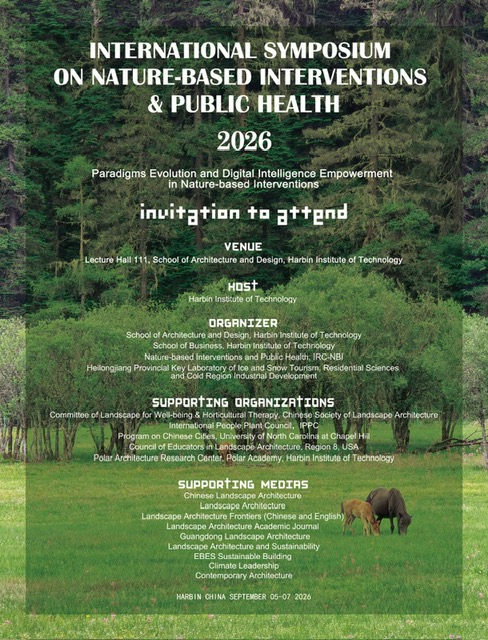
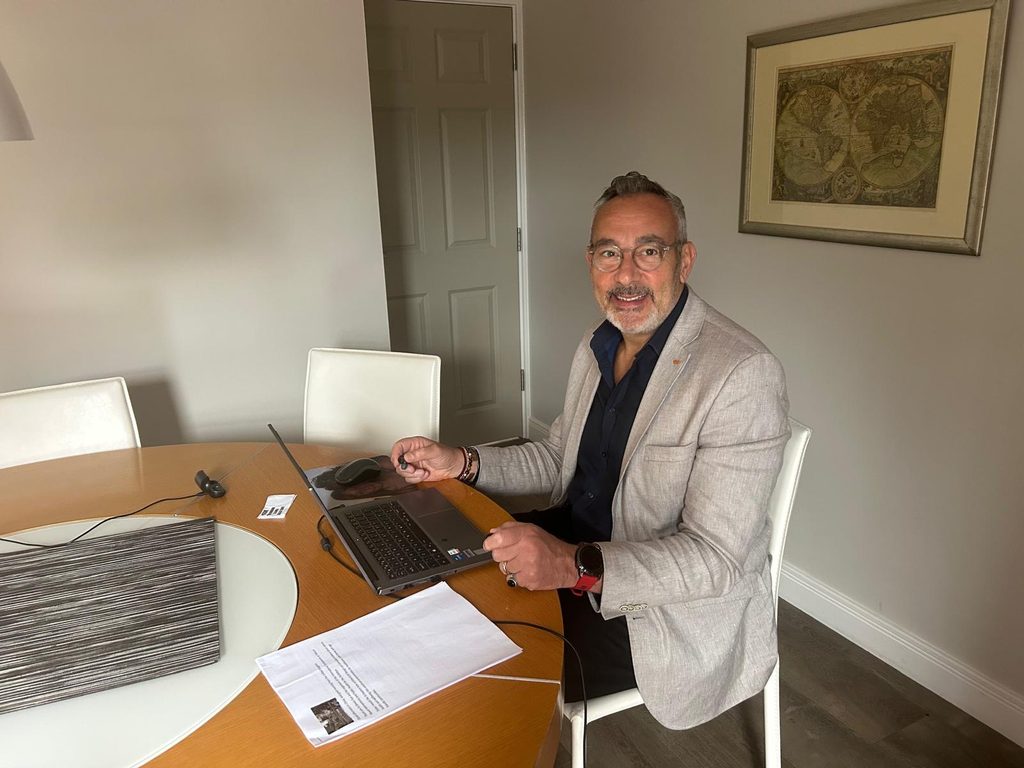
Joining the symposium online from the UK, Alessandro presented “From Nature-Based Interventions to Healing Architecture: Translating Evidence into Design Practice”, exploring how growing evidence around nature, health and wellbeing can be translated into practical decisions in the design of healthcare environments, care homes and age-friendly communities.
The international symposium brought together researchers and professionals to explore the relationship between nature-based interventions, the built environment and public health.
From nature-based design to Relational Architecture
A central theme of Alessandro’s presentation was that creating a health-supportive environment involves more than introducing individual features such as planting, natural materials or views of nature.
Healthcare buildings inevitably influence human experience, from stress and cognitive load to how safe, comfortable and in control people feel. As Alessandro explained, the more important question is therefore not simply whether a building functions effectively, but what kind of human experience it creates.
This thinking underpins an emerging concept Alessandro describes as Relational Architecture.
Rather than considering a building as a passive physical object, Relational Architecture considers the relationships between person and nature, person and place, people themselves, building and landscape and environment and time.
A health-supportive environment therefore does not result from one feature in isolation. It emerges through the interaction of multiple conditions that can support orientation, calm, dignity, autonomy, connection and recovery.
Translating evidence into real environments
The presentation drew upon ACA’s experience of designing healthcare and care environments to demonstrate how these principles can translate into practice.
Alessandro discussed the Allam Diabetes Centre in Hull, where nature was interpreted through architectural form, natural light, symbolism and sensory experience to create an environment intended to move away from a purely institutional experience of healthcare.

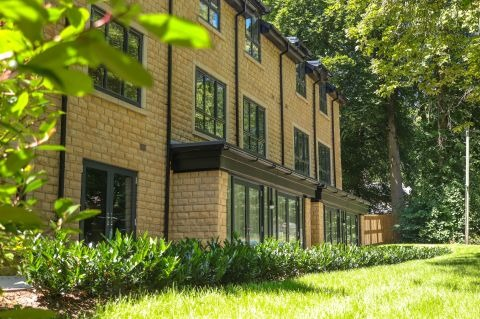
He also considered Langtree Care Home, part of a wider Care Village in Standish, where architecture was integrated more directly with landscape and daily life.
For people living in a care environment, the relationship with a building extends through changing seasons, routines, memories and health needs. Access to gardens, views of landscape, domestic scale, clear wayfinding and opportunities for both community and privacy therefore become part of a much wider relationship between resident, carer, family, environment and time.
Both examples led to a further question:
How do we know whether the environments architects intend to support health and wellbeing actually achieve those outcomes once people begin using them?
Moving from design intention to evidence
This question is informing ACA’s development of the Relational Environmental Assessment (REA).
REA is an emerging structured approach that examines three interconnected areas: Person, Environment and Flow. Considering factors ranging from privacy, dignity and control to lighting, acoustics, nature, navigation, workflow and adaptability.
Its purpose is not to replace professional judgement or reduce human experience to a single score. Instead, it aims to make the relationship between environment and experience more visible, measurable and capable of informing future design decisions.
Alessandro also shared insights from ACA’s recent testing of this approach within a relatively new children and young people’s mental-health facility in England.
The assessment demonstrated why post-occupancy learning matters. Even within an environment regarded positively by the client, detailed observation with the people operating the building identified differences between design intention and lived experience, including acoustic privacy, sensory environments, landscape maintenance and the performance of furniture within a specialist mental-health setting.
Rather than suggesting that the original design was unsuccessful, these observations demonstrate something fundamental to the concept of Relational Architecture: the relationship between people and buildings continues to evolve long after the architect leaves.
Can architecture become evidence-generating?
Alessandro concluded the presentation by proposing a further development in the relationship between architecture and research:
“Can architecture evolve from being evidence-informed to becoming evidence-generating?”
Traditionally, evidence flows predominantly in one direction: research informs design.
But if occupied buildings are evaluated systematically, they can themselves generate evidence about how people experience factors including nature, light, acoustics, movement, privacy and community.
The process can therefore become a continuous cycle:
Evidence → Design → Experience → Evaluation → New Evidence
Each completed building then has the potential to contribute knowledge to the next.
An international challenge for healthcare and age-friendly design
The discussion is particularly relevant as countries around the world respond to ageing populations, increasing mental-health demand, workforce pressures and climate risk, alongside continued investment in hospitals, care environments and age-friendly communities.
As Alessandro argued during the symposium, these sectors should not be considered simply as construction markets. They represent opportunities for the built environment to contribute to public health, resilience, social connection and quality of life.
The presentation concluded by opening two questions for international discussion:
How can nature-based design adapt to different cultural, climatic and care contexts without becoming a formula?
And how can we measure whether a healing environment is actually improving human experience and wellbeing?
For ACA, these questions form part of an ongoing exploration of how healthcare architecture can progress beyond good intentions towards environments whose impact can be observed, evaluated and continuously improved.
Keep up to date with ACA News!
Frequently Asked Questions
What is healing architecture?
Healing architecture is an approach to design that considers how the built environment can support people’s physical, mental and emotional wellbeing. Natural light, effective acoustics, intuitive layouts, comfortable materials and connections with nature can all contribute to healthcare spaces that feel calmer, more welcoming and less institutional.
What is person-centred design?
Person-centred care design places the needs, dignity, comfort and experiences of the people using a healthcare environment at the centre of the design process. It involves listening to patients, families and staff and using their insights to create spaces that are inclusive, accessible and responsive to different physical, sensory and emotional needs.
What is biophilic design?
It is an approach within the built environment that strengthens the connection between people and nature. Biophilic design can include planting, natural materials, views of green spaces, daylight and outdoor areas. Research suggests that this can help reduce stress, improve wellbeing and create more restorative environments.
How does architecture influence wellbeing?
Well-designed spaces can reduce stress, encourage social interaction, improve comfort and create healthier environments through thoughtful planning, as the design of a building can have a significant impact on how people feel and interact with their surroundings. By considering wellbeing from the outset, architects can create buildings that positively influence everyday life.
How does ACA approach healthcare design?
ACA is committed to human-centred design balanced with operational efficiency. We create buildings that support both healthcare professionals and the people they care for by considering factors such as natural light, spatial layout and wellbeing. Through close collaboration with clients, healthcare professionals and contractors, ACA creates environments that support better patient care while delivering long-term value.
Related Resources
– ACA Delivers Inspiring Lecture at the University of Hull on Healthcare Design Innovation
– Proud Mentor: Alex Caruso Appointed to Prestigious RIBA Future Architects Programme for 2025/26
– Transforming Healing Spaces – Visionary Guest Speaker on Healthcare Design