
ACA is delighted to have been shortlisted for New Build Project of the Year at the 2026 Healthcare Estates Awards for Langtree Care Home in Standish.

The project, designed for Millennium Care Group, has been recognised among the shortlisted entries for this year’s awards, which celebrate excellence across the healthcare estates and facilities sector.
The winner will be announced at the Healthcare Estates Awards Dinner at the Kimpton Clocktower Hotel in Manchester on 13 October 2026.
For ACA, the recognition is particularly significant because Langtree reflects an approach to care architecture that places the everyday experience of residents at the heart of design.
Creating a care home that feels like home
Unlike many healthcare environments that people may visit for an appointment or a period of treatment, a care home becomes part of someone’s everyday life.
This creates a very different architectural responsibility.
At Langtree, the aim was to move away from an institutional model of care and create an environment that supports dignity, independence, comfort and a sense of belonging.
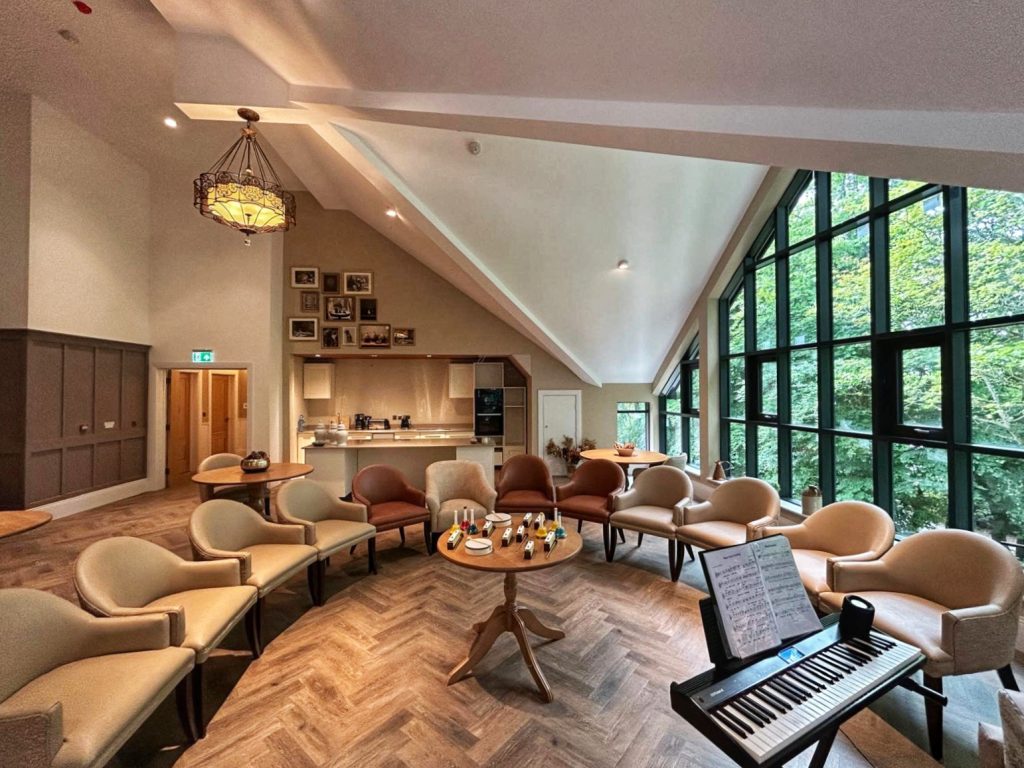
The design uses a domestic scale, clear wayfinding and access to both communal and quieter private spaces, recognising that residents need opportunities for social interaction while retaining choice and privacy.
These principles reflect ACA’s wider approach to care home design: creating welcoming, homely environments that support residents’ comfort, dignity, safety and independence while enabling staff to provide effective care.
Connecting architecture, landscape and everyday life
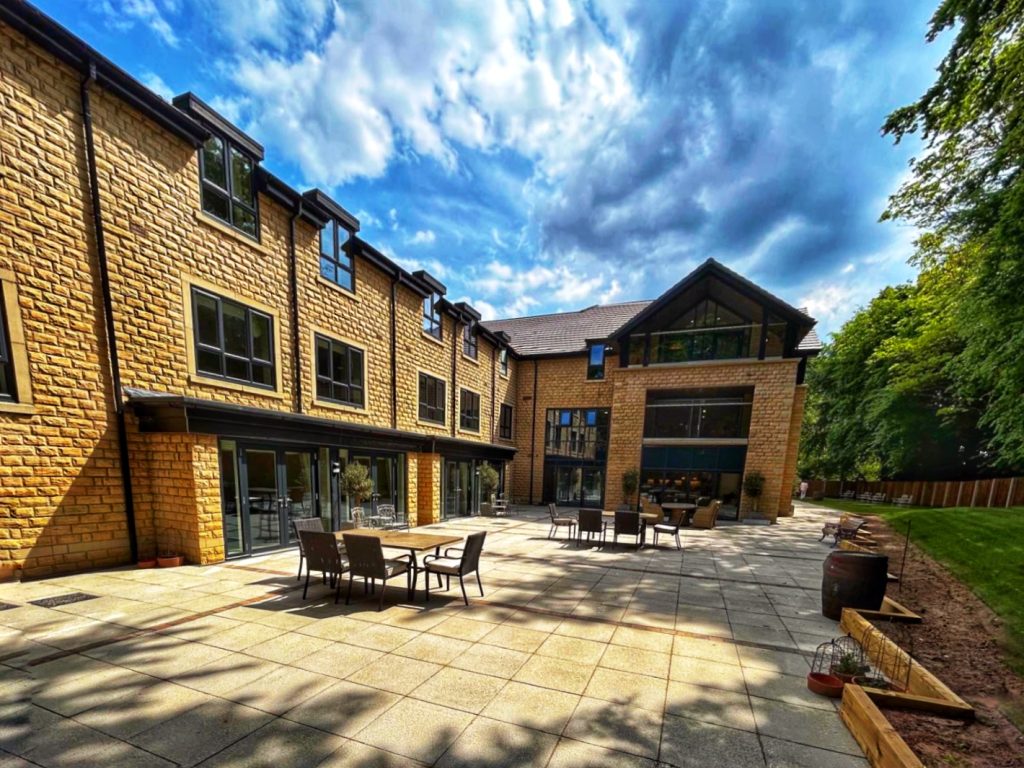
An important element of Langtree is the relationship between the building and its landscape.
Residents experience their surroundings throughout the day and across changing weather and seasons. Views, daylight, gardens and opportunities to spend time outdoors can therefore become meaningful parts of everyday life rather than simply aesthetic additions.
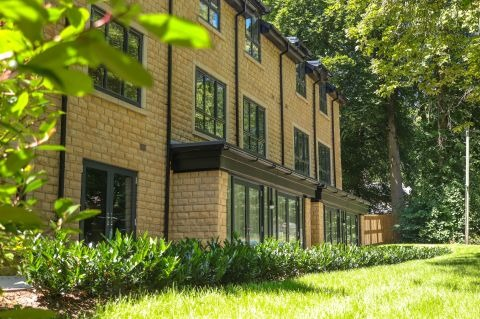
Accessible outdoor spaces can provide opportunities for fresh air, gentle activity, social interaction and connection with nature, helping create comfortablei and connected care communities.
This relationship between architecture and nature is also becoming increasingly important within ACA’s wider research into how built environments can support human health and wellbeing.
Designing around people
Langtree demonstrates a principle that runs throughout ACA’s work: buildings should be designed around the people who will experience them.
Person-centred design considers the needs, dignity, comfort and experiences of building users from the beginning of the design process, responding to different physical, sensory and emotional needs.
For care environments, this means considering much more than the individual room or the technical requirements of the building.
It means thinking about how someone finds their way around, where they meet other people, whether they can find privacy when they want it, their relationship with the outdoors, how spaces feel at different times of day and how the environment can continue to support them as their needs change.
International recognition and an evolving design philosophy
The Healthcare Estates Awards shortlisting follows a period of continued exploration at ACA into the relationship between architecture, health and human experience.
Langtree recently featured in ACA Director Alessandro Caruso’s presentation to the International Symposium on Nature-Based Interventions & Public Health 2026 at Harbin Institute of Technology in China.
During the presentation, Alessandro used the project to explore how architecture in a care setting becomes intertwined with landscape, routine, memory, community and time.
As he explained, a care home is not somewhere somebody experiences for a few hours or days: it is home. At Langtree, the relationship between resident, carer, family, garden, room and community therefore became an important part of the architectural thinking.
These ideas are contributing to Alessandro’s emerging concept of Relational Architecture, which considers buildings as dynamic systems of relationships rather than simply physical objects.
Celebrating a collaborative achievement
Being shortlisted for New Build Project of the Year is also recognition of the collaboration required to turn an architectural concept into a completed care environment.
The award entry was submitted by Alessandro Caruso Architecture & Interiors Limited on behalf of the wider project team:
ADS
Alessandro Caruso Architecture & Interiors (ACA)
Millennium Care
Overford
P&DG
ACA would like to congratulate everyone involved in Langtree and thank Millennium Care Group and the wider project team for their contribution to its successful delivery.
We look forward to joining colleagues from across the healthcare sector in Manchester in October, and finding out who will be named New Build Project of the Year 2026.
Keep up to date with ACA News!
Frequently Asked Questions
How should care homes be designed?
Care homes should be designed around the comfort, dignity, safety and independence of residents, with clear layouts, accessible facilities, natural light, comfortable communal areas and quieter private spaces to create a welcoming and homely environment. Designs should also support staff in providing safe and effective care while remaining adaptable to residents’ changing needs.
Why are outdoor spaces important in care environments?
Accessible outdoor spaces provide opportunities for fresh air, gentle activity, social interaction and connection with nature. Gardens, terraces and landscaped areas can give residents a change of environment while supporting relaxation and everyday wellbeing.
What is person-centred design?
Person-centred design places the needs, dignity, comfort and experiences of the people using an environment at the centre of the design process. It involves listening to users, families and staff and using their insights to create inclusive and accessible spaces responsive to different physical, sensory and emotional needs.
What makes a healthcare building welcoming?
A healthcare building feels welcoming when it is easy to understand, comfortable and reassuring from the moment people arrive. Natural light, clear wayfinding, intuitive layouts, comfortable waiting areas, good acoustics and connections with nature can all help create a calmer, less institutional environment. Patients and visitors can feel more confident, comfortable and at ease during what may be a stressful experience through thoughtful design.
How does ACA approach healthcare design?
ACA is committed to human-centred design with the balance of operational efficiency. ACA creates buildings that support both healthcare professionals and the people they care for by considering factors such as natural light, spatial layout and wellbeing. Through close collaboration with clients, healthcare professionals and contractors, ACA creates environments that support better patient care while delivering long-term value.
Related Resources
– How Site Visits Create Better Patient Environments: A Day in the Life of a Healthcare Architect
– Design in Mental Health Awards 2026: ACA Celebrate “Highly Commended” Recognition
– ACA Celebrate Outstanding Shortlisting at Prestigious DIMH Awards 2026!